 Fakel
Fakel FC Orenburg
Form Analysis and Betting Insights
Fakel's recent form has been less than impressive, accumulating just one point from their opening four matches this season. Their recent sequence of results, including a narrow 1-0 loss to CSKA Moscow and a goalless draw at home against Akhmat, highlights their struggles. However, their overall home form across the last 20 matches shows a balanced record, with two wins and five draws, suggesting they are not easily beaten on their own turf. This record is essential in understanding the market's pricing, as Fakel's defensive solidity at home could be underestimated by the odds. FC Orenburg, on the other hand, have shown a mixed bag of results. Their recent 1-1 draws against Lokomotiv and Rubin reveal a team capable of holding their own, although their 5-1 defeat away to Spartak Moscow underscores vulnerabilities, particularly away from home. A key point for bettors is that while Orenburg have scored an average of one goal per game in their last 20 matches, their defensive frailties are more pronounced, with an average of 1.9 goals conceded per away match. This inconsistency in both defence and attack provides an opportunity for value betting, particularly if Fakel can exploit these weaknesses.
Market Analysis and Betting Value
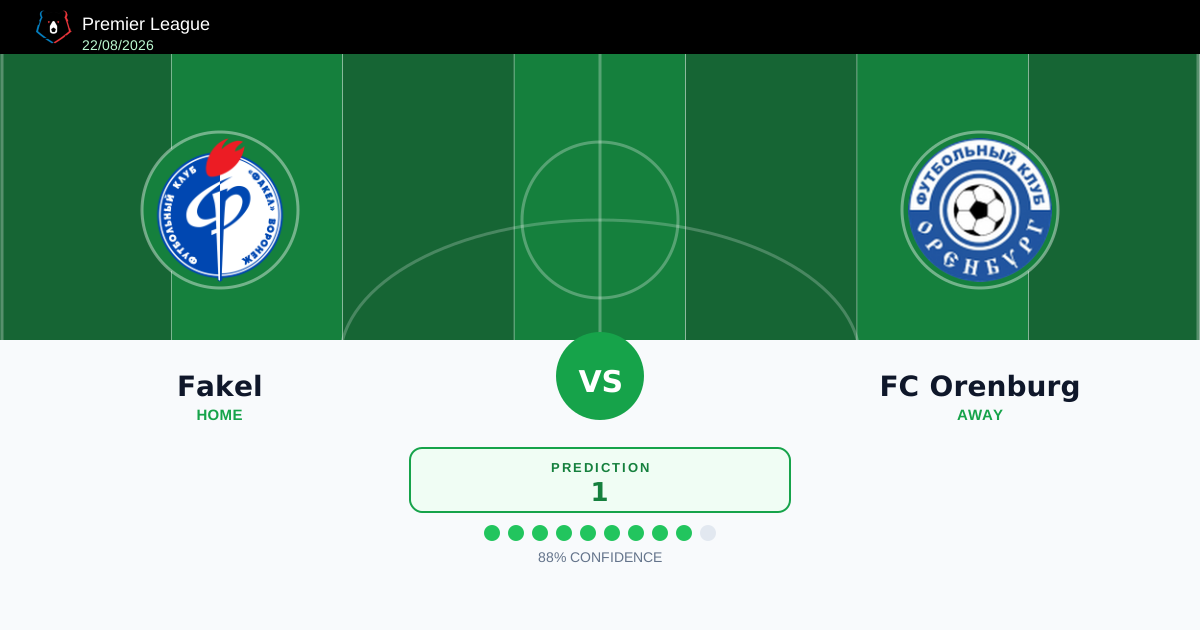
When analysing the match result market, Fakel are priced at odds of 2.48, translating to an implied probability of 42.32%. The model, however, estimates a 57% chance of a Fakel victory, presenting a value edge of 14.68 percentage points. This significant discrepancy suggests that the market is undervaluing Fakel's chances, particularly considering their home resilience. On the Over/Under 2.5 goals market, the model predicts a 45% probability for over 2.5 goals, closely aligning with the market odds of 2.16, showing no clear value. The Both Teams to Score (BTTS) market, with odds of 1.85 for 'Yes', implies a 54.05% probability, compared to the model's 45%, indicating no apparent value here either. However, the Double Chance market offers an alternative; Fakel or Draw is priced at 1.42, providing a safer option but with limited value given the high implied probability. Ultimately, the match result market offers the most substantial value for bettors, with Fakel's home advantage and defensive record providing a strong foundation for this pick.
Risk Assessment and Betting Discipline
In evaluating the risks, Fakel's recent poor form could challenge the value proposition, as their last win came in early July. If Orenburg manage to exploit Fakel's defensive lapses, particularly in the second half, the value pick could be jeopardised. The market seems to price in Fakel's recent losses rather heavily, perhaps more than warranted by their home performance metrics. Two realistic failure scenarios include an early goal by Orenburg, setting the tone for a counter-attacking match, or Fakel struggling to find the net, as they have failed to score in 40% of recent matches. Market disagreement with the model's assessment lies in the weight given to Fakel's recent form against their historical home advantage. Discipline in betting should be maintained; if Fakel's odds drift to below 2.20, the value edge diminishes, necessitating careful stake management.
Betting Verdict and Value Proposition
The best value pick for this match is Fakel to win at odds of 2.48, offering a considerable value edge of 14.68 percentage points. This recommendation is grounded in the model's robust 57% win probability for Fakel, significantly higher than the implied market probability. The confidence in this selection stems from Fakel's home defensive strength and the apparent market undervaluation. As an alternative, the Double Chance market, offering Fakel or Draw at odds of 1.42, provides a lower-risk option, though with less attractive returns. The primary risk to this pick is Fakel's recent lack of victories, which could undermine confidence. However, their home form and Orenburg's defensive vulnerabilities away suggest the value is justified. Should Fakel's odds shorten significantly, reducing the value edge below 5%, reassessment would be prudent.